Thinking about retiring in Portugal in 2026?
This complete guide explains the D7 visa, pension payments, cost of living, healthcare access, lifestyle, and the best retirement locations — using up-to-date 2025–26 data.
Why consider retiring in Portugal
Portugal has become one of Europe’s most appealing retirement destinations for good reason.
The country offers a mild Mediterranean climate, reliable infrastructure, and an easy rhythm of daily life.
English is widely spoken in coastal towns, healthcare is EU-standard, and crime rates are among the lowest in Europe.
Retirees also value Portugal’s transparent visa process. The D7 Passive Income Visa allows anyone with predictable income (such as a pension or rental yield) to obtain residency and later permanent status or citizenship.
Combined with affordable living costs and cultural depth, Portugal balances practicality and lifestyle better than most European alternatives.

Cost of living in Portugal
Portugal’s cost of living remains moderate by Western-European standards, although location can impact this significantly. Lisbon and Cascais command London-style rents, while towns along the eastern Algarve or the country’s interior still offer a lower cost of living.
Average monthly budget (single, 2025–26)
| Expense | Typical Range | Notes |
|---|---|---|
| Rent (1-bed) | €700–€1,000 east Algarve; €1,200–€2,000 Lisbon centre | Long-term leases cheaper off-season |
| Utilities | €90–€150 | Electricity, water, gas, waste |
| Groceries / dining | €250–€400 | Fresh markets 20–25% cheaper than UK |
| Transport | €40–€120 | Monthly pass or moderate car usage |
| Private health plan | €40–€120 | Optional but common |
Total: €1,500–€2,000/month outside Lisbon, or €1,900–€2,800 in the capital.
Portugal’s minimum wage for 2025 is €870/month; a comfortable retirement generally requires at least double that for flexibility and leisure.
Portugal retirement visa (D7): requirements and process
The D7 Visa — also known as the Passive Income Visa — is Portugal’s primary route for non-EU considering retiring in Portugal.
It grants a renewable residence permit that can lead to permanent residency or citizenship after five years.
Eligibility for retiring in Portugal
- Steady passive income from pensions, rentals, or investments
- Proof of accommodation (rental or ownership)
- Private health insurance valid in Portugal
- Clean criminal record
- Portuguese NIF tax number
- Portuguese bank account with funds to cover initial living costs
Minimum income evidence
The law references one Portuguese minimum wage per applicant (€870/month in 2025)
However most consulates prefer proof of €1,200–€1,500 per month to ensure stability — about €15,000–€18,000/year for a single person or €22,000–€25,000/year for a couple.
Application sequence when retiring in Portugal
- Apply in your home country at a Portuguese consulate with all documentation. The D7 visa is valid for four months and allows two entries.
- Enter Portugal and schedule an appointment with AIMA (which replaced SEF) for your residence permit.
- Residence permit issued: valid for two years, renewable for three.
- After five years, apply for permanent residence or citizenship if language and integration criteria are met.
Tax update for 2026
Portugal’s popular Non-Habitual Resident (NHR) tax regime closed to new applicants in 2024.
The new IFICI or “NHR 2.0” scheme only benefits specific skilled professions — foreign pensions no longer qualify.
UK pensioners should expect normal taxation under the Portugal–UK tax treaty.
Professional tax advice is strongly recommended.
UK State Pension payments when retiring in Portugal
UK citizens retiring in Portugal continue to receive the full State Pension with annual uprating, protected under the UK–EU withdrawal arrangements.
Payments can go to any UK or multi-currency account (Wise, Revolut, etc.) with no freeze.
If you draw a UK State Pension, you are entitled to an S1 form
This allows you to register for state-funded healthcare in Portugal while the UK reimburses the costs.
Apply for the S1 through the UK’s Overseas Healthcare Services before leaving Britain.
Healthcare and insurance
Public healthcare (SNS)
Portugal’s Serviço Nacional de Saúde (SNS) provides universal, subsidised care.
After receiving your residence card, register at your local centro de saúde using your NIF, proof of address, and ID.
Most treatments require small co-payments (consultation ~€5–€10).
Private options when retiring in Portugal
Private insurance is widely used for shorter waiting times and English-speaking doctors.
Plans start around €40/month for basic coverage and average €80–€120/month for comprehensive options.
Major hospital networks like CUF, Luz, and HPA have branches in Algarve, Lisbon, and Porto.
Pharmacies
Pharmacies are reliable, with regulated pricing. Many medications are cheaper than in the UK even without insurance.
Safety and stability considerations when retiring in Portugal
Portugal consistently ranks among the top ten safest countries worldwide on the Global Peace Index.
Violent crime is rare; pickpocketing in tourist areas is the main concern.
The country enjoys political stability, strong public institutions, and minimal natural-disaster risk
These are key qualities for retirees thing about retiring in Portugal who are seeking predictability.
Lifestyle and daily life in Portugal
Portugal’s rhythm is unhurried. Days start early, lunches are long, and evenings revolve around cafés, promenades, and social connection.
Community
Expat groups thrive in the Algarve, Lisbon, and Porto.
Portuguese communities are open and friendly to newcomers who make an effort with the language.
Culture and recreation
Portugal’s history is visible in its tiled streets, hilltop castles, and small-town festivals.
Outdoor life dominates: coastal walks, hiking, and year-round golf.
The climate is mild even in winter, though central heating is uncommon.
Language
English works in tourist hubs, but basic Portuguese dramatically improves integration, property negotiations, and day-to-day life.
Best places to retire in Portugal
Olhão (Eastern Algarve)
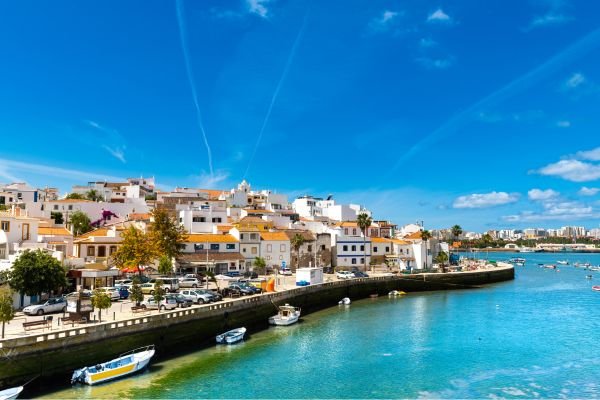
Once a working fishing port, Olhão has become one of the Algarve’s most liveable towns for retirees.
It blends affordable apartments, walkable streets, daily produce markets, and a friendly expat presence without the tourist chaos of Albufeira or Lagos.
The waterfront promenade and ferries to the sand-bar islands give easy access to quiet beaches. With year-round sunshine and strong transport links to Faro, Olhão offers low-stress coastal living at genuine local prices.
Lagos (Western Algarve)

Lagos combines dramatic beaches, reliable healthcare access, and an active international community. The marina and compact historic centre keep everything close.
It’s more expensive than Olhão but still below southern-European resort levels.
Excellent medical facilities and English-speaking services make it ideal for retirees who want a coastal base with social activity and good infrastructure.
Coimbra (Central Portugal)

Coimbra delivers cultural depth and lower living costs away from the coast. The riverside city hosts Portugal’s oldest university, classical architecture, and a lively café culture.
It’s well connected by rail, has reputable hospitals, and rent is often half Lisbon prices.
Retirees who prefer an urban but manageable environment find Coimbra a smart midpoint between affordability and amenities
Braga (Northern Portugal)

Braga offers cooler summers, clean air, and strong value for money. Known for its gardens, churches, and growing tech economy, it’s modern yet traditional.
Public transport and healthcare are excellent, and property prices remain moderate. Its inland position means fewer beach days but plenty of cultural life and access to nature trails.
Cascais (Lisbon Coast)
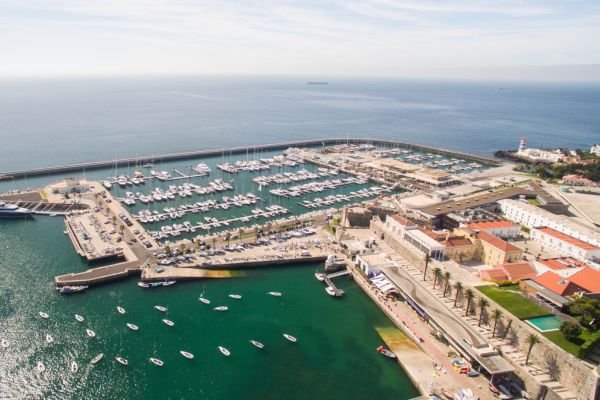
Cascais sits 40 minutes from Lisbon yet feels like a seaside resort town.
It’s elegant, safe, and well-served by private clinics and rail. Prices are higher, but retirees benefit from easy access to Lisbon’s airport and cultural scene while living beside the ocean.
Ideal for those prioritising comfort, security, and year-round services.
Pros and cons of retiring in Portugal
Pros for retiring in Portugal
- Annual UK pension uprating
- Low crime and political stability
- EU-standard healthcare
- Sunshine across most of the year
- Easy D7 visa route
- English widely spoken in coastal towns
Cons against retiring in Portugal
- Bureaucracy and slow paperwork
- Limited long-term rental supply in tourist areas
- Rising property prices near Lisbon and the Algarve
- No new tax breaks for foreign pensions
- Some homes lack heating for cooler months
FAQs
Can a UK citizen retire in Portugal?
Yes. UK nationals can apply for the D7 Passive Income Visa and, once resident, renew toward permanent residency or citizenship after five years.
How much money do you need to retire in Portugal?
A realistic minimum is €1,500–€2,000/month outside Lisbon or €1,900–€2,800/month in Lisbon/Cascais. Couples should add roughly 40–50%.
What is the downside of retiring in Portugal?
Administration can be slow, rentals are tight in coastal towns.
NHR pension tax exemption no longer exists for newcomers.
Where is the cheapest place to retire in Portugal?
Interior cities such as Castelo Branco, Viseu, and Bragança. Also eastern Algarve towns like Tavira, typically have the lowest living costs.
Is healthcare good in Portugal for retirees?
Yes. The SNS provides comprehensive care. UK pensioners can use the S1 scheme, and private insurance is affordable for faster service.
Official sources and references
Serviço Nacional de Saúde (SNS)
AIMA – Portuguese Immigration and Integration Agency
Portuguese MFA – National Visas
UK Government – State Pension: Claiming Abroad
Global Peace Index 2025 – Institute for Economics & Peace
Further Reading
Best Country to Retire in 2026: Top 10 Destinations