Introduction
Retiring in Malta combines Mediterranean warmth with English familiarity — a rare mix of lifestyle and practicality. The islands offer year-round sunshine, political stability, and modern infrastructure while remaining small enough to feel safe and personal. For British and Northern European retirees, Malta is especially convenient: English is official, the legal system feels familiar, and the currency is the euro.
Unlike some larger destinations, Malta’s scale works in its favour. Everything you need — cafés, pharmacies, ferries, or hospitals — is nearby. It’s an environment built for simplicity rather than endless travel. Retiring in Malta means shorter distances, stronger communities, and a genuine sense of security under the Mediterranean sun.
Why Consider Retiring in Malta
Malta offers year-round sunshine, low crime, and a structured system that makes integration easy. English is used universally in government, healthcare, and daily life. The climate is typically Mediterranean, with mild winters (average 15–17°C) and dry, hot summers around 32°C. The sea stays warm until late autumn, making outdoor living a natural part of daily routine.
Culturally, Malta sits between Southern Europe and Britain. You’ll find Italian-influenced food and café life alongside British-style plugs, left-hand driving, and widespread English-language media. The population is friendly yet reserved, and most locals speak both Maltese and English.
Healthcare is ranked among the best in Europe, infrastructure is modern, and the legal system is stable. These are the building blocks of a calm, low-risk retirement destination — one where administration can be slow, but outcomes are predictable.
Cost of Living in Malta
Malta’s cost of living is moderate by Western European standards but higher than Eastern Europe. The real difference lies in rent — housing near the coast commands a premium due to limited space and high demand. Everyday goods and services remain reasonably priced.
A typical retirement budget ranges from €1,400 to €1,800 per month for a single person, or €2,200 to €2,600 for a couple living comfortably.
| Expense | Sliema / Valletta | Gozo / Marsaskala |
|---|---|---|
| Rent (1-bed, city centre) | €900–1,200 | €600–850 |
| Utilities & Internet | €100–130 | €90–110 |
| Groceries & Dining | €400–500 | €350–450 |
| Transport & Misc. | €60–80 | €50–70 |
| Total | €1,400–1,800 | €1,100–1,500 |
Malta uses the euro (€), providing currency stability and eliminating exchange-rate swings for EU residents. For UK retirees, the euro–pound relationship is relatively stable, and international banking tools like Wise or Revolut work flawlessly.
Public transport is efficient and cheap — a monthly Tallinja bus pass costs around €26 — while walking remains the best way to get around coastal towns. Electricity and water are billed bi-monthly, so costs fluctuate slightly depending on season and air-conditioning use.
Visa and Residency Options – Retiring in Malta
The Malta Retirement Programme (MRP)
The Malta Retirement Programme (MRP) is the primary route for non-EU retirees. It’s designed for those with a guaranteed pension or foreign income and provides a flat 15% tax rate on money remitted to Malta. Income kept abroad is not taxed locally.
Eligibility requirements include:
- Proof that at least 75% of total income comes from a pension.
- Renting or purchasing a qualifying property (€9,600 annual rent or €275,000 purchase in Malta; €8,750 / €220,000 in Gozo or the south).
- Private health insurance covering all EU territories.
- Proof of clean criminal record and minimum presence of 90 days per year in Malta.
Applications are submitted via Identity Malta with a fee and due diligence checks. The minimum annual tax is €7,500 plus €500 per dependent. Full details appear on CFR.gov.mt.
Global Residence Programme (GRP)
The GRP suits semi-retired or remote-income applicants who are not solely pension-funded. It offers similar tax treatment (15% on remitted income) but broader eligibility. Applicants must prove sufficient foreign income and secure suitable housing.
Malta Permanent Residence Programme (MPRP)
For wealthier retirees seeking permanence, the MPRP provides permanent residence through an investment and property contribution of roughly €100,000–€150,000.
EU / EEA Citizens
EU and EEA retirees have it simplest. They can register with Identity Malta after arrival by demonstrating self-sufficiency and healthcare coverage. A residence card is issued for five years and renewable indefinitely.
State Pension and Taxes
UK State Pension
Malta has a social security agreement with the UK, meaning British retirees receive the full annual uprating of their UK State Pension. Payments continue as normal through UK banks, and transfers to Maltese accounts are straightforward.
Tax Residency and Double Taxation
Malta’s tax system is based on residence and remittance. Retirees are taxed only on income they bring into Malta, not on income kept abroad. This flexibility makes it one of Europe’s most pension-friendly systems.
Malta and the UK share a double taxation agreement, ensuring you don’t pay tax twice on the same income. There is no inheritance tax, no annual property tax, and no wealth tax. Stamp duty and capital gains apply only when selling property within three years.
Healthcare and Insurance – Retiring in Malta
Malta’s healthcare system is among the best in the EU. It offers universal coverage for residents and low-cost access to private specialists.
Public Healthcare
The Mater Dei Hospital in Msida is the main public facility, supported by Gozo General Hospital and numerous local clinics. Services include GP care, emergency treatment, and hospitalisation. EU citizens can use their EHIC or GHIC card for temporary stays, while long-term residents register for full coverage.
Private Options
Private healthcare complements the public system. English-speaking doctors, quick appointments, and affordable premiums make it attractive. Insurance typically costs €800–€1,200 per year, depending on age and benefits. Common insurers include AXA, Atlas, and Bupa.
Pharmacies are widespread, and prescription prices are low. Repeat medications and chronic care plans are easy to arrange, with many doctors trained in the UK or Italy.
Safety, Stability, and Infrastructure
Malta ranks consistently high for safety, placing near the top quartile in the Global Peace Index. Violent crime is extremely rare, and neighbourhoods are walkable and well-lit.
The infrastructure is reliable. Broadband speeds exceed 100 Mbps in urban areas, mobile coverage is island-wide, and the bus network covers every major town. Driving follows the UK’s left-hand system and uses British Type-G plugs, which makes life simpler for UK expats.
Power cuts are rare, water is safe to drink, and the postal and banking systems function efficiently. Bureaucracy can be slow, but the fundamentals — utilities, healthcare, and security — are stable and predictable.
Lifestyle and Community – Retiring in Malta
Malta’s rhythm is slow, friendly, and outdoorsy. Life revolves around the sea: early swims, cafés, market trips, and long evening walks.
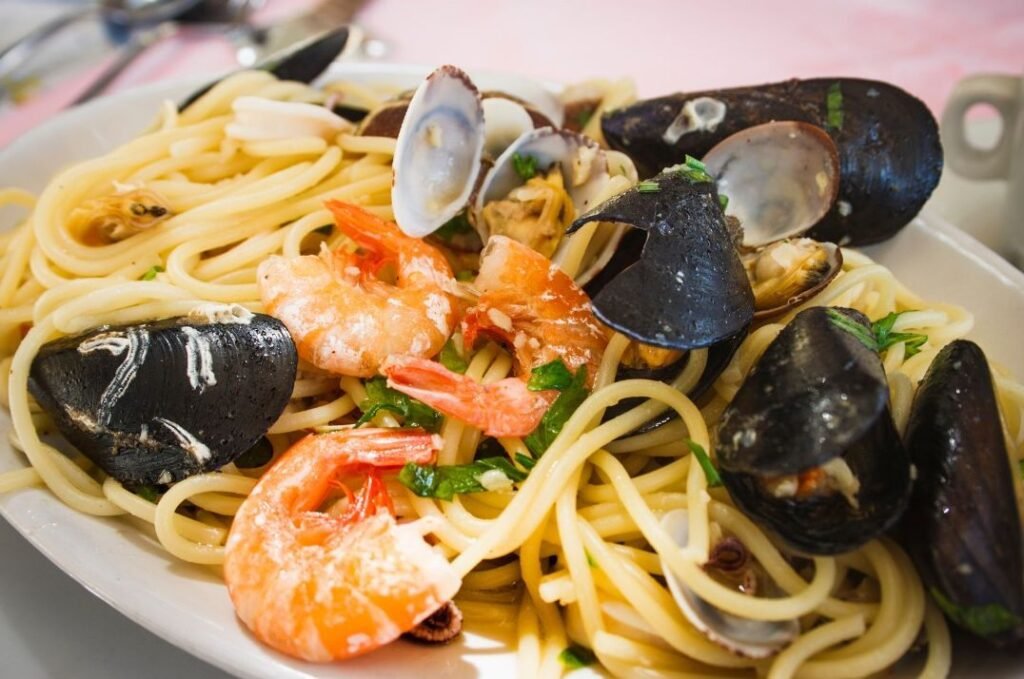
English is everywhere, and local Maltese culture blends southern warmth with northern efficiency. The social calendar is packed with village festas, open-air concerts, and maritime festivals.
Retirees will find an active expat scene concentrated in Sliema, St Julian’s, and Gozo. Social groups, cultural associations, and volunteer opportunities make integration easy. Sundays are quiet, and locals value family time, so expect early closures outside tourist zones.
The climate remains mild year-round, with shoulder seasons (April–June and September–November) offering the most comfortable balance of warmth and calm.
Best Places to Retire in Malta
1. Valletta
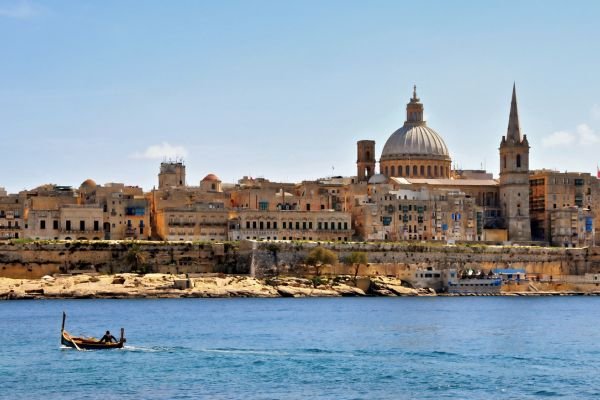
Valletta, the capital, is a masterpiece of Baroque architecture and sea views. The city’s compact layout, cultural energy, and walkability make it ideal for retirees who value history and accessibility over space. Apartments are small and expensive, but everything you need — healthcare, ferries, cafés, and community — is within minutes. The atmosphere is elegant and distinctly European, attracting artists, diplomats, and long-term expats alike.
2. Sliema & St Julian’s
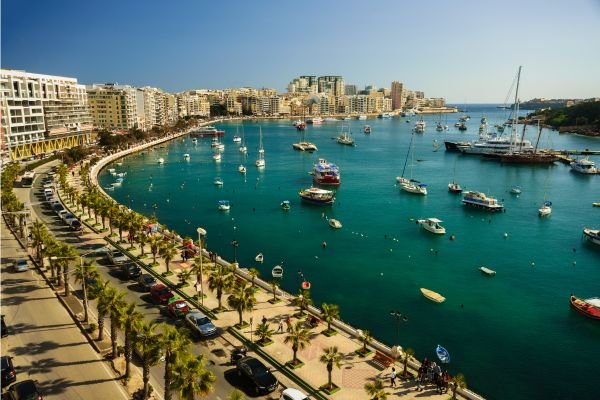
These coastal neighbours form Malta’s modern, international heart. Seafront promenades stretch for kilometres, lined with cafés and restaurants. English is universal, healthcare clinics are close, and social life is active. Sliema and St Julian’s suit retirees who want walkable convenience, vibrant surroundings, and direct ferry access to Valletta. The drawback is cost — rent and summer crowds are higher than elsewhere.
3. Gozo (Victoria, Xlendi, Marsalforn)
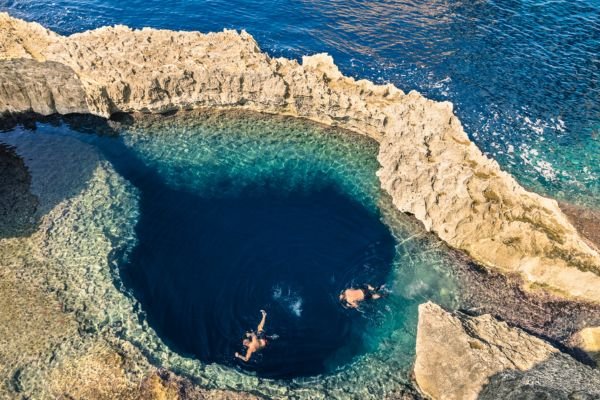
Gozo is Malta’s tranquil twin — greener, quieter, and less crowded. Its landscapes of cliffs, farmland, and coves attract retirees seeking peace and nature. Rents are lower, and life feels more traditional. Healthcare is solid via Gozo General Hospital, and ferries to the main island run frequently. Gozo appeals to retirees who value calm over nightlife and prefer community to crowds.
4. Mellieħa and Bugibba
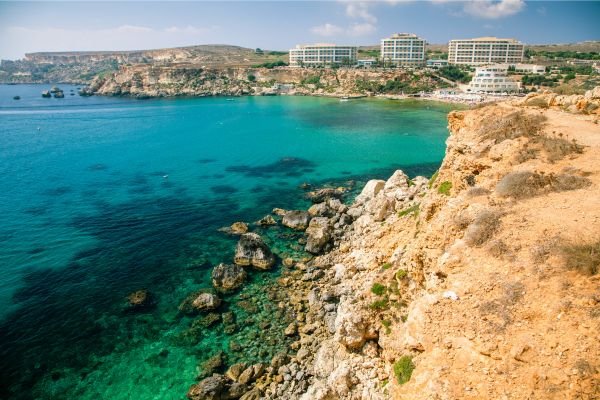
In the north, Mellieħa and Bugibba combine long beaches with modern amenities. Apartments are affordable, and the promenades are flat and ideal for daily walks. The area is busy in summer but comfortable in winter, offering a balance between accessibility and cost.
5. Marsaskala and Birżebbuġa
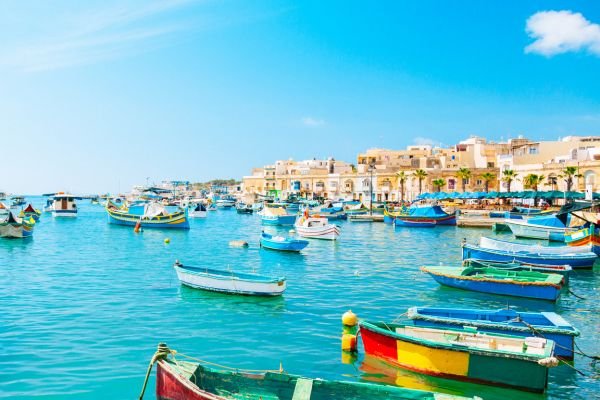
The south offers real Maltese character at lower prices. Marsaskala’s marina and Birżebbuġa’s beach are favourites among long-term residents. The towns are peaceful, residential, and 20–30% cheaper than Sliema. They suit retirees who want authenticity and easy airport access without losing coastal charm.
Pros and Cons of Retiring in Malta
Pros for retiring in Malta
- English widely spoken and legally official.
- Excellent healthcare and EU-standard safety.
- 300+ sunny days per year.
- Tax-efficient for pension income.
- Compact, walkable, and easy to navigate.
- Politically stable, euro currency, and strong expat support.
Cons against retiring in Malta
- High rent in central areas.
- Bureaucracy can be slow.
- Summer heat and heavy tourism.
- Limited variety — it’s a small island.
- Traffic congestion in urban areas.
Frequently Asked Questions – Retiring in Malta
Can I live comfortably on €2,000 per month?
Yes, particularly outside the Sliema–Valletta corridor. Gozo and southern Malta offer excellent value.
Do I need private health insurance?
Yes, unless you are an EU national with reciprocal public access. Private insurance ensures faster treatment and English-speaking doctors.
Will my UK pension increase annually?
Yes. The UK–Malta agreement ensures full uprating of the State Pension.
Is Malta safe for older residents?
Extremely. It’s one of the safest countries in Europe, with very low violent crime.
Do I need a car?
Not in central coastal areas. Public buses and ferries make car-free living practical.
Is Gozo too remote?
No. It’s only a 25-minute ferry to Malta, with strong healthcare and a close community.
Official Sources and References – Retiring in Malta
- Identity Malta – Residence & Visa Programmes
- CFR Malta – Malta Retirement Programme
- UK Government – Living in Malta Guide
- National Statistics Office – Malta
- Global Peace Index