Malta travel guide – Malta in February isn’t a beach holiday — it’s something better. It’s warm enough to sit by the sea with a hot drink, cool enough to wander for hours without melting, and quiet enough to feel like the place is revealing itself just to you.
This wasn’t just a winter break. It was the first serious test of an idea that’s been growing in my mind: could I retire by the sea, somewhere warmer, quieter, and slower? Four days in Malta gave me a moment of clarity I didn’t expect — and I’ll never forget where it happened.
While you’re here, don’t miss my handpicked list of the best things to do in Malta for tours, passes, and activities you can book in advance.
Heads up: This post contains affiliate links. If you book or buy through them, I may earn a small commission — at no extra cost to you. Thanks for supporting The Nomadic Pensioner!
Heathrow to Gżira — A Soft Landing
Lufthansa out of Heathrow. Clean, calm, and even a free hand luggage upgrade. That meant I could walk the terminal with nothing but my coat and thoughts — no suitcase dodgems.
A brief stop in Munich, where Lufthansa’s real-time alerts guided me every step. Then a sunset arrival in Luqa, where the whole process — passport, customs, transfer — was effortless. I was at my hotel in Gżira within 60 minutes, looking out over the marina as the last of the light bounced off the boats.
That spot quickly became my ritual. Morning coffee and evening reflection on the same bench by the water. It’s hard to overstate how much that routine grounded the trip.
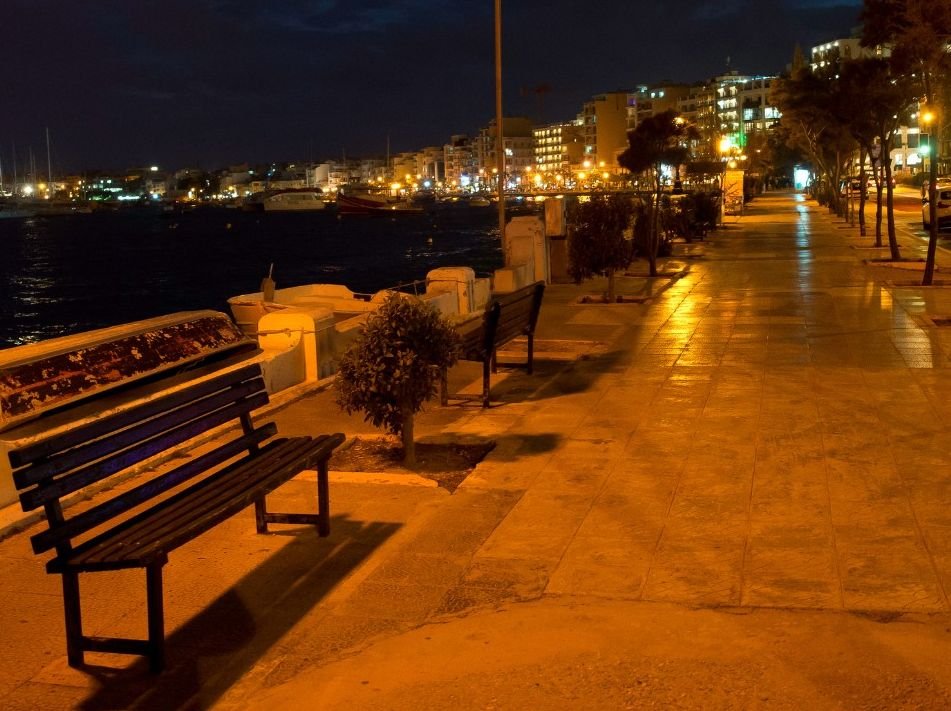
Dinner was street-simple: €5 kebab plate with sides, eaten at a pavement table shared by six or more restaurants. That shared-outdoor-seating layout is uniquely Maltese, and it works.
A final stop in a corner shop for bottled water gave me a first taste of the island’s warmth. The shop had already cashed up, but they handed me the bottle anyway. “Just come back tomorrow.” That moment stayed with me.
Malta travel guide – Two Harbours, Ten Creeks, and Centuries of Strategy
The day started simply — I’d planned to take the ferry to Valletta, but it wasn’t running that morning, just one of things with Malta in February. So I walked down to the Sliema waterfront and hopped on the Two-Harbour Cruise with Luzzu. No reservations, just €20 and an upper-deck seat under cool February skies.
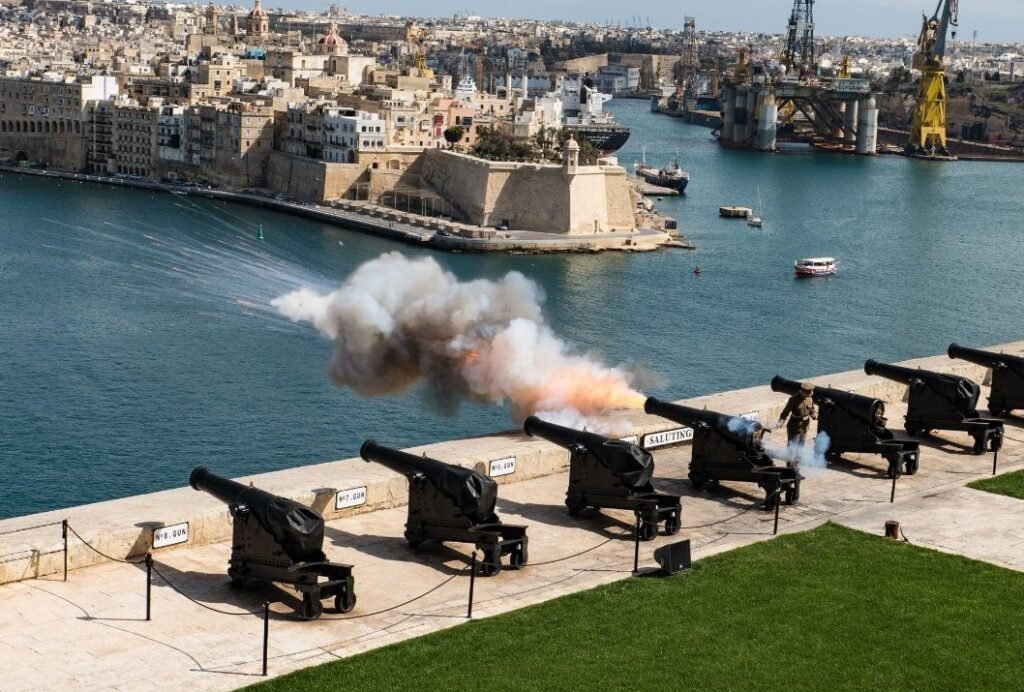
We drifted through Marsamxett and the Grand Harbour, weaving in and out of ten creeks while the commentary revealed just how much history is packed into these waters. Valletta’s fortifications rose on one side, the Three Cities on the other — Senglea, Vittoriosa, and Cospicua, each with a history heavier than their size suggests.
History Recycled
But it wasn’t just fortresses and skyline views. The guide pointed out one of the strangest, most fascinating sights I’ve come across in any harbour: actual cannons — muzzle-down — embedded into the quayside, still used today as mooring bollards.
Left behind by the French, these old guns were repurposed by the British after they kicked Napoleon off the island. Instead of melting them down or putting them in a museum, they rammed them into the harbour and tied ships to them. The symbolism is perfect: weapons of war, silenced and reused to hold the island steady
Then there were the dry docks, specifically designed to fit any vessel that could pass through the Suez Canal. It’s not just historical — it’s forward-thinking. Malta built those docks to ensure relevance in a post-imperial world. A reminder that this small island has always played a bigger game than its size implies.
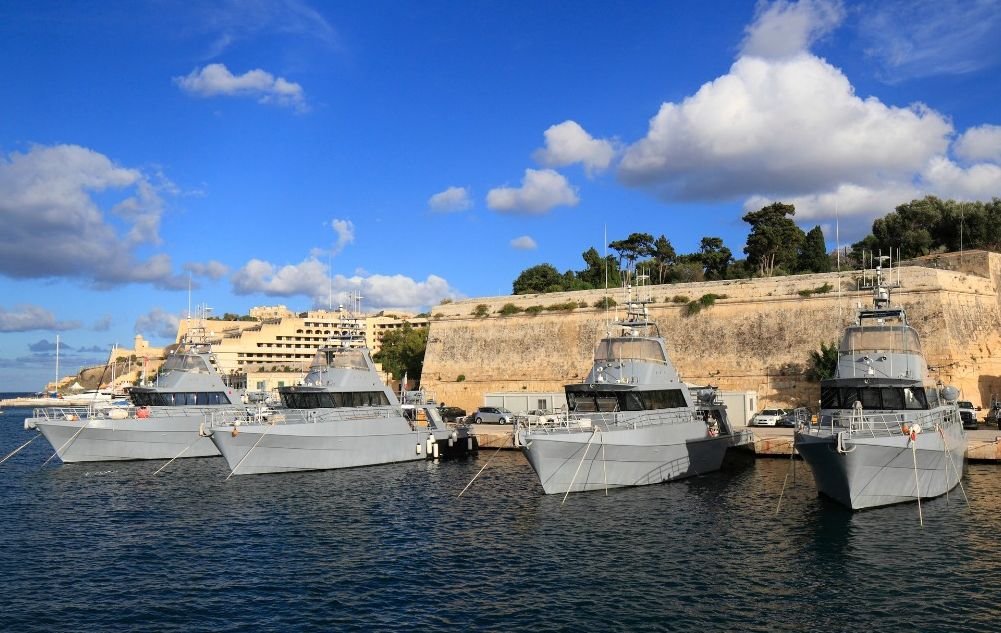
We even passed modern Maltese naval vessels docked nearby — compact but capable. Malta still guards its harbours, just with fewer cannons and more strategy
Why Malta in February Felt Like a Turning Point
What struck me most wasn’t just the sights — it was how this short cruise previewed every major thread of the trip: war, reinvention, resistance, and geography as destiny. Places I’d explore in more depth later — St. Elmo, St. John’s, even Mdina — all came into focus as part of the same bigger picture.
Malta doesn’t just have history. It recycles it — into bollards, dry docks, city walls, and stories.
After all the history, the ships, and the stone, the day ended with something simple — and unforgettable.
A short walk from the hotel took me to a little Italian restaurant tucked just off the main drag. No crowds, no fanfare. Just a warm welcome and one of the best seafood linguines I’ve ever had. Perfectly cooked pasta, tender clams and mussels, and a broth that somehow tasted of both butter and sea.
No photo, no review — just a quiet table, full heart, and a moment to let everything settle and reflect on my time in Malta in February.
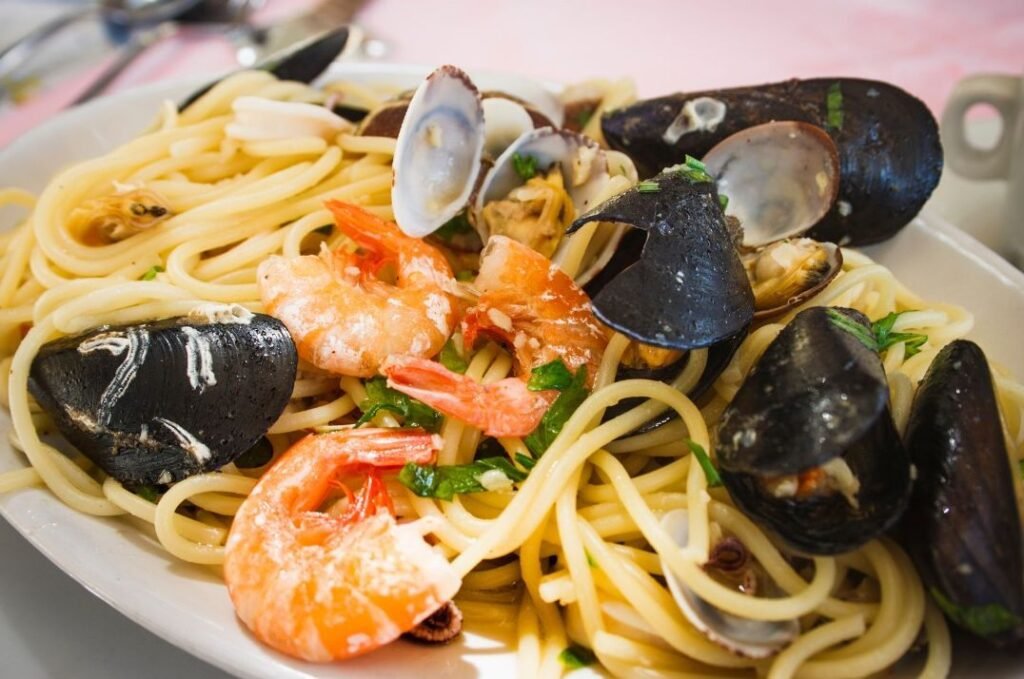
It was the perfect contrast to a day full of cannons and dry docks. Malta delivers big history — but it also knows how to do the small things just right.
Malta travel guide: Retirement Scouting, Roman Baths & Mdina After Dark
This day changed everything.
I set off along the coastline toward St. Julian’s, meandering through residential neighbourhoods, past corner cafés and laundrettes, through streets where real life hums just below the surface.
And this wasn’t just a walk. It was a retirement scouting trip, the reason I choose Malta in February to avoid the crowds. I paused at estate agent windows, checking price points. Some too high, some too tempting. One house, though, stopped me cold.
It had a red front door, deep crimson shutters, and a wooden balcony that looked like it had seen decades of sunrises. I crossed the road and sat down on a bench in the shade of an old tree, beside a red British phone box — the kind I’d grown up seeing, now a relic turned landmark.
🌳 A Bench Beneath the “Three Trees”
This wasn’t just any bench. As it turns out, it’s part of a spot officially named “Three Trees” — now a listed landmark in Sliema. A red British phone box, an old stone bench, and three proud shade trees that have quietly witnessed decades of local life.
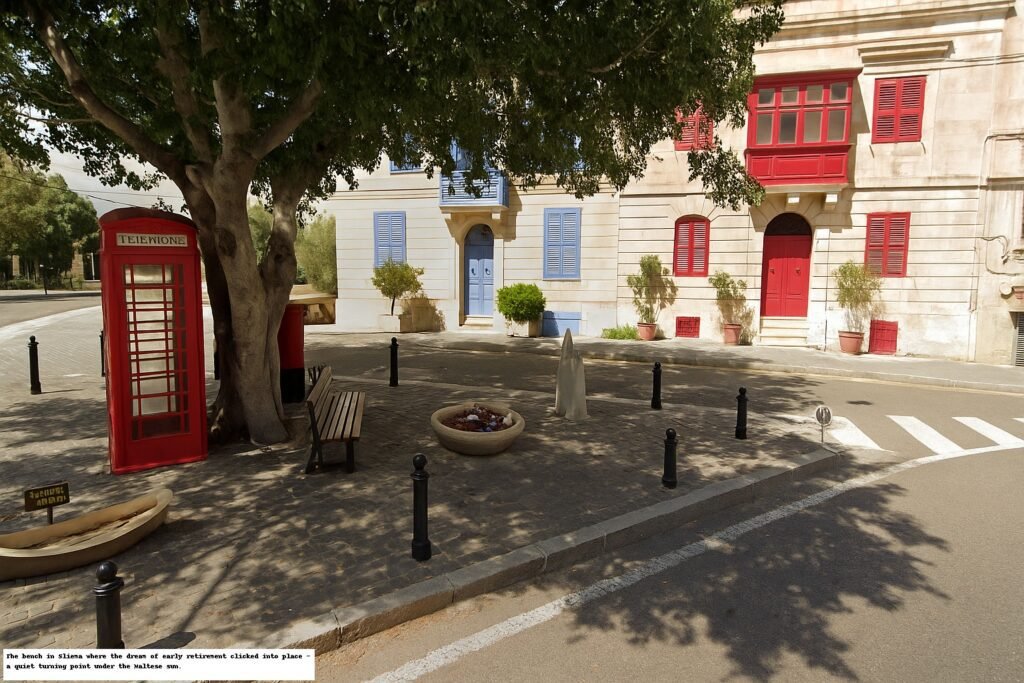
I didn’t know it at the time — but something about those trees, the quiet, the view across to that red-doored townhouse… it brought everything into focus.
The afternoon continued through Exiles Bay, where the coast reveals ancient Roman baths carved directly into the rock. A cat garden tucked beside a public path caught my eye, lovingly tended. Malta in February has a way of folding surprises into the mundane.
🌙 A Night of Fire, Faith, and Stone — Mdina, Mosta & Valletta
That evening, I joined a guided night tour — part sightseeing, part time travel. The route: Valletta by twilight, a stop at the Mosta Dome, and finally, the silent shadows of Mdina.
We began with a drive through Valletta as the city lit up gold — not from floodlights, but from the very stone itself. Maltese limestone glows under artificial light in a way I’ve never seen before. The effect is theatrical, like the city was built for the stage.
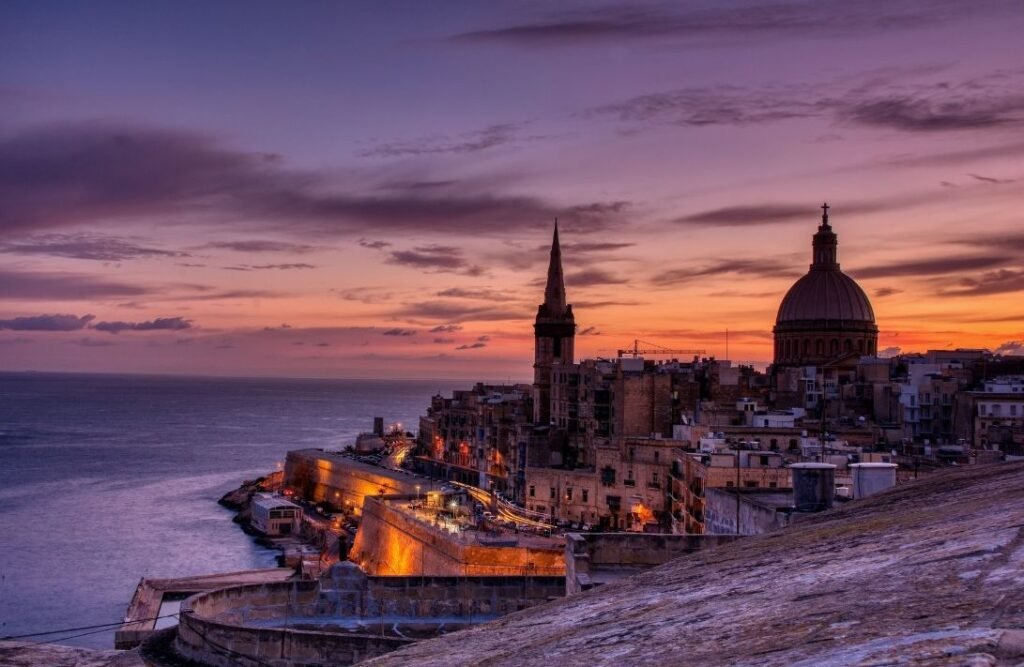
We paused at Barrakka Gardens, which offered a panoramic view over the Grand Harbour, now wrapped in quiet and shadows. The air was still, and the streets — so busy by day — felt almost like they were holding their breath.
Next came the Malta 5D show — the ultimate Malta travel guide, a brief, immersive experience that compressed centuries of conquest, resistance, and reinvention into a whirlwind of imagery, sound, and motion. I didn’t expect much going in, but it worked. It gave me just enough understanding to frame what I’d see next. It stirred the curiosity that places like Fort St. Elmo and St. John’s would later satisfy.
From there, we drove to Mosta — a town known for one thing: the dome.
The Mosta Rotunda is immense — one of the largest unsupported domes in the world. But what gives it weight isn’t the architecture. It’s the story.
In 1942, during WWII, a German bomb dropped straight through the dome during Mass. The church was full. The bomb didn’t explode.
That moment is woven into local identity. People don’t tell it like a military fact — they tell it like a miracle. And when you stand there, beneath that soaring ceiling, it’s hard not to believe them.
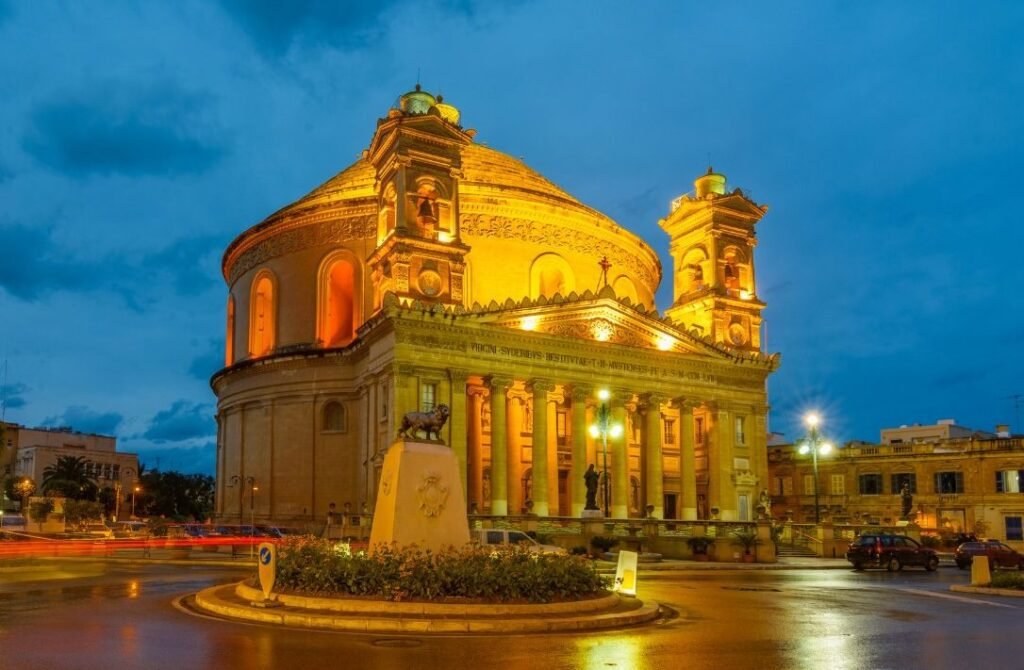
And then, Mdina.
It’s hard to put into words what Mdina feels like at night. It’s not just quiet — it’s ancient quiet. The kind of silence that wraps itself around you. No traffic. No noise. Just the sound of your own steps echoing off limestone walls polished by centuries of feet.
We walked past St. Paul’s Cathedral, through alleys where gas lamps flickered, and out to the bastion walls, where the entire island spread out before us like a living map.
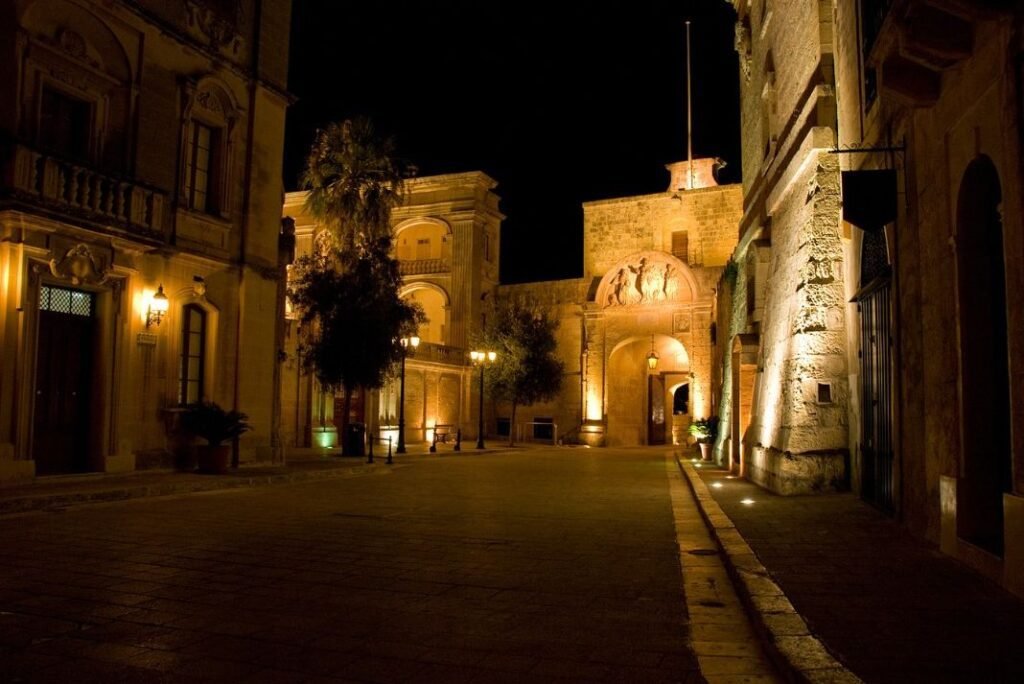
In that moment, the whole historical web of Malta snapped into place:
- Mdina, the old capital — noble, defensive, spiritual.
- Fort St. Elmo, where knights made their final stand.
- St. John’s Co-Cathedral, their resting place, carved in gold.
- Valletta, the city they built in victory, shining in the dark.
Every place I visited told part of the same story — of holding the line, of sacred ground, of rebirth through war.
We had time for a drink before heading back — but I didn’t want to talk. I just wanted to let the layers settle.
That night didn’t just show me places. It gave me a thread that wove the whole trip together.
Malta travel guide: Valletta’s Walls, War Stories & a Walk Through Time
My final full day in Malta in February started with the ferry to Valletta, and it’s hard to imagine a better way to enter a city. As the boat glides across the Grand Harbour, the sandstone ramparts of Valletta rise slowly into view — massive, golden, quietly defiant. It’s a skyline carved by war and shaped by empire.
Once ashore, I walked straight to Fort St. Elmo and the National War Museum, perched at the eastern tip of the city. Malta travel guide through the ages. The fort is both fortress and timeline. It begins with the arrival of the Knights Hospitaller, continues through the siege of 1565 when Malta was nearly overrun by the Ottoman Empire, and stretches into the modern era, where Malta stood again on the frontline — this time during World War II.
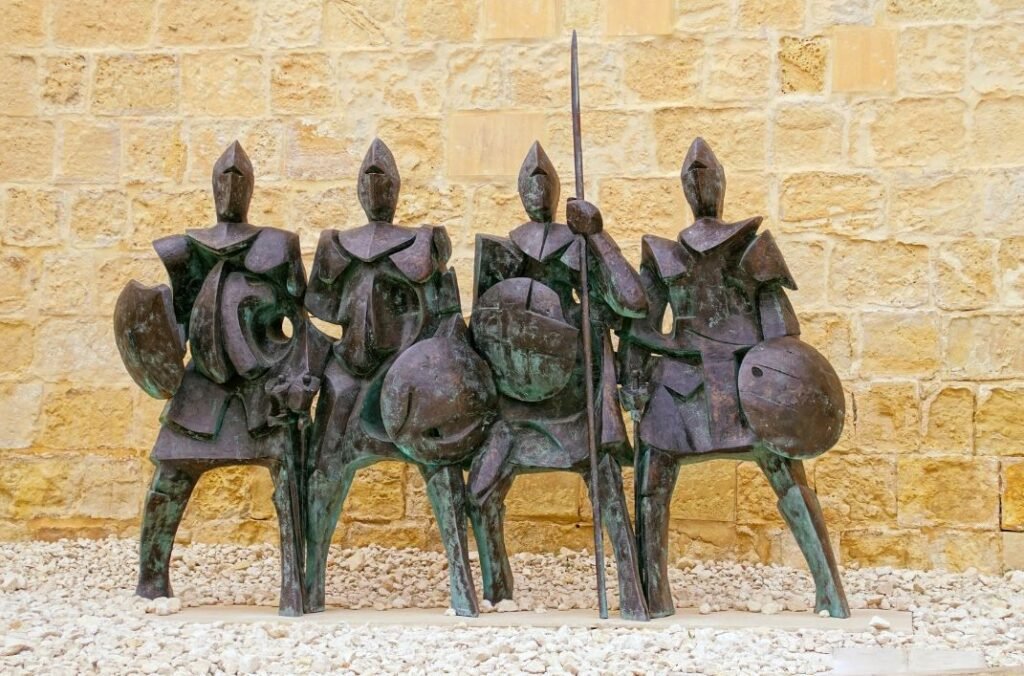
Inside the museum, the exhibits are honest and quietly powerful. I followed the story of the Knights — picking up where my past curiosity with the Templars left off — and saw how the Hospitallers inherited not just their legacy, but their mission to defend Christendom.
One fact floored me: on the first day Italy joined WWII, Malta was hit with more bombs than London saw during the entire Blitz. That’s how vital this tiny island was to the Allies. That’s how badly people wanted to break its spirit. And yet it held.
Getting Fit in Malta in February
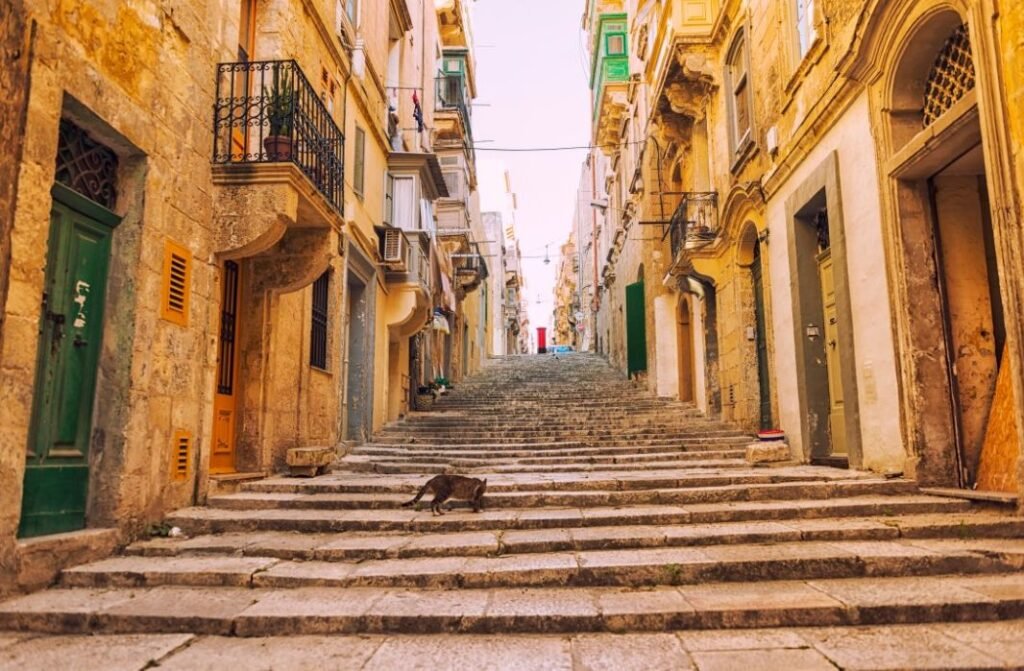
From there, I exited through a quiet corner of the city and climbed Triq Sant’ Orsla — a long, steep street flanked by shuttered windows, stone staircases, and multi coloured balconies. It’s one of those walks you must do Malta in February that leaves your legs aching but your camera full.
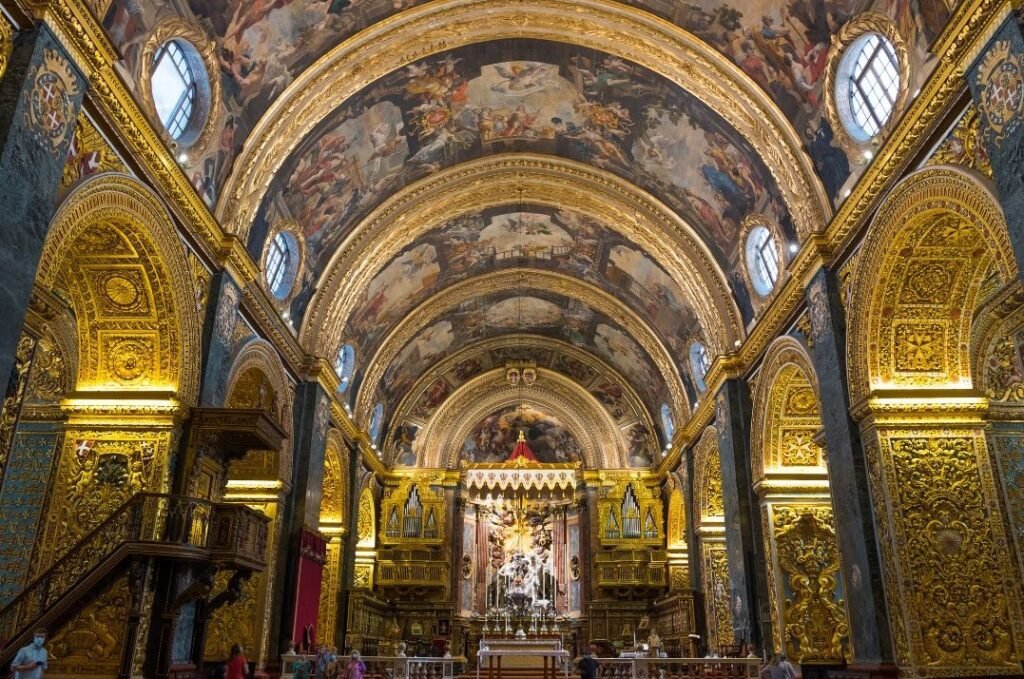
At the top, I wandered down to St. John’s Co-Cathedral — and if you think you’ve seen churches before, this one might reframe the standard. Gold leaf, marble tombs, and solemn silence — all dedicated to the knights who once ruled from these streets.
Inside, I stood before the tomb of Jean de Valette, the Grand Master who led Malta’s defense during the Great Siege and later gave his name to the city. There’s something fitting about ending the trip here. After four days of seeing Malta in February from the outside — its cafés, harbours, homes — this was the island speaking from the inside out. Its history, Its resilience, Its soul.
I left the cathedral slowly, taking side streets through the centre before boarding the ferry back. One last espresso on the bench by the marina. No checklist left, no rush. Just the feeling that I’d walked through something important — and understood it just enough to want to come back to.
Last Day : Nothing but Time
I didn’t plan anything for the final day. Just a book, a coffee, and my bench reflecting on my time in Malta in February.
Malta travel guide – Final Thoughts on Malta in February
If you’re testing the waters for a slower, more intentional way of life, Malta in February has something quietly powerful to offer. It’s not just warm weather — it’s clarity, stillness, and space to think.
These moments help shape your retirement vision — and if you’re curious where this journey began, read my Nomadic Retirement story here.
Malta travel guide – What I Used (Just in Case It Helps You)
💳 Travel Smarter with Wise
Hold 40+ currencies, spend worldwide with real exchange rates, and save on fees.
👉 Open Your Wise Account Today
💸 Turn Your Spending into Travel Money
Earn cashback on everyday purchases — from travel bookings to groceries.
👉 Join TopCashback Free
Night Tour incl. Mdina, Mosta, Valletta – A gentle introduction to Malta’s highlights by night. A great way to settle in on day one.
- Luzzu Two-Harbour Cruise – A relaxing way to start the first full day. Traditional Maltese boat, scenic views of both harbours, an essential addition to any Malta travel guide
- Fort St. Elmo & War Museum – Included with the Malta Multi Pass – History buffs will love this. The pass covers 38 top attractions across Malta and Gozo, making it excellent value if you’re visiting more than one.
- Valletta Walking Tour + The Malta Experience + Optional Cathedral Entry – A well-organized tour through Malta’s UNESCO capital. Cathedral admission is optional — but I’d definitely recommend including it.
- Pre-booked Transfer (Expedia) – €9 return, smooth and reliable.
- Cabin Max 55x40x20 Lightweight Backpack (Amazon UK) – Held everything I needed for four days, and easily fit into coach racks and ferry compartments. Great option even when you’re not flying.
- I used my new Wise Card throughout Malta — easy to top up, worked everywhere, and the exchange rate beat my UK bank every time.
- I also ran NordVPN on all my devices — perfect for safely checking online banking or booking ferries on public Wi-Fi.
🎯 Malta travel guide Find & Book the Best Tours
If you’d like even more inspiration for your trip, you can browse my Malta Travel Shop section for activities, passes, and tours I recommend.
🔑 Best Travel Tools Special Bonus Tip – Stack Your Savings
Want to stretch your travel budget even further?
Once you’ve signed up for both TopCashback and Expedia, you can combine them to earn double rewards on the same booking:
- Join TopCashback using the link above.
- Sign up for Expedia (free) to unlock One Key Member Prices and loyalty rewards.
- When you’re ready to book, log into TopCashback first, search for “Expedia,” and click through to book your flights, hotels, or packages.
✅ You’ll get Expedia’s member-only discounts plus cashback from TopCashback on the same booking — a win-win for any traveller.
Why Malta in February Felt Different
This wasn’t just a trip — it was a vision check. A way to ask myself: could I really do this? Could I live somewhere like this?
And in that quiet moment on a random bench in Sliema, looking at a red door I’d never seen before, the answer came quietly and confidently: yes.
As I left Malta, I realised those quiet February days had offered more than sunshine and sea air — they’d reaffirmed why I chose this path. Moments of stillness, freedom, and the unexpected sense of “home” are exactly what this lifestyle is about. If you’re new here or curious how it all began, my Nomadic Retirement Journey shares the full story behind this shift — and why trips like this mean so much more than just travel.
Stay in the Loop
I’m building a mailing list for fellow over-50s, aspiring early retirees, and anyone curious about affordable nomadic living.
No spam — just real stories, smart tools, and monthly updates from the road.
Click here to be first on the list — I’ll send you a quick welcome once it’s ready.
Pingback: Retiring in Cyprus: The Brutally Honest Reality Check 🇨🇾 - The Nomadic Pensioner
Pingback: Nomadic Retirement: My Journey to a Free Pensioner Life - The Nomadic Pensioner